Selecting the right software to communicate with your audience can feel like walking through an endless maze. Every platform promises to maximize your revenue, offer flawless automation, and simplify your daily workflows. For small business owners and digital marketing teams alike, picking the wrong platform wastes financial resources and can hurt your audience engagement.
Among the well-established platforms in the industry is Campaigner. While some entry-level tools focus entirely on extreme simplicity for absolute beginners, Campaigner takes a different path, emphasizing deep customization, high-volume sending reliability, and advanced testing. However, higher complexity means it is not the perfect fit for every type of organization.
Whether you are evaluating your very first email software or looking to migrate from a platform you have outgrown, this objective guide breaks down exactly what Campaigner is, how it works, and which business types stand to benefit the most from its specific feature set.
What Is Campaigner?
Campaigner is an enterprise-grade email marketing and marketing automation platform designed to help businesses create, send, and track large-scale email campaigns. It sits in a tier of tools built specifically to handle complex data structures, advanced personalization, and high-volume delivery.
Unlike highly visual tools that cater mostly to casual bloggers or hobbyists, Campaigner focuses heavily on programmatic features. It offers robust tools for setting up behavioral workflows, managing massive contact databases, and running intricate split tests on your messaging.
For businesses looking to build a highly structured, data-driven communications engine, understanding the core architecture of this platform is a vital step. If you are entirely new to this channel, reviewing Email Marketing Basics can help ground these advanced software functionalities.
Why Choosing the Right Email Platform Is Crucial
Your email marketing software is not just an editing tool; it is the infrastructure that holds your customer data and connects directly with your audience’s inboxes. Making an uninformed choice can lead to significant operational bottlenecks down the road.
Protecting Email Deliverability
Deliverability refers to the percentage of your sent emails that successfully land in the recipient’s primary inbox rather than the spam folder. High-volume platforms like Campaigner invest heavily in clean server reputations and technical verification tools (like SPF, DKIM, and DMARC records). If your software lacks robust deliverability protocols, your carefully written messages will never be seen by your subscribers.
Scaling with Operational Growth
Migrating a massive database of contacts, historical analytics, and automated workflows from one platform to another is a notoriously slow and painful process. Choosing a system that can handle your data complexity from the beginning saves hundreds of hours of technical labor as your customer base expands.
Aligning Cost with Feature Utilization
Software pricing scales based on contact counts and feature tiers. Paying a premium for an enterprise platform when you only need to send a simple monthly newsletter leads to an inefficient marketing budget. Conversely, picking an underpowered tool means missing out on the tracking data required to optimize your campaigns.
How Campaigner Works
Campaigner operates as a centralized hub for consumer data and automated messaging workflows. Instead of just sending blanket email broadcasts to your entire list, the system tracks individual user behaviors and adjusts your marketing outputs accordingly.
The system relies on several core functional mechanisms:
[Data Input]        --> API integrations or manual uploads populate the contact database.
[Segmentation]      --> The system groups users based on behavior, purchase history, or location.
[Automation Engine] --> Visual workflows trigger targeted emails based on specific user actions.
[Analytics Suite]   --> Detailed reports track open rates, link clicks, and conversion events.
To make this ecosystem function smoothly, Campaigner uses a visual workflow builder that allows users to map out multi-step customer journeys. For example, if a user clicks a specific link in an introductory email, the system can automatically tag that user as “Interested in Product X” and route them into a dedicated educational sequence. To learn more about how this logic fits into a wider digital strategy, refer to our comprehensive article, What Is Digital Marketing?
Core Types of Advanced Features in Campaigner
To understand who benefits most from Campaigner, it is necessary to examine the specific technical features that differentiate it from standard, beginner-focused software tools.
1. Robust Marketing Automation Architecture
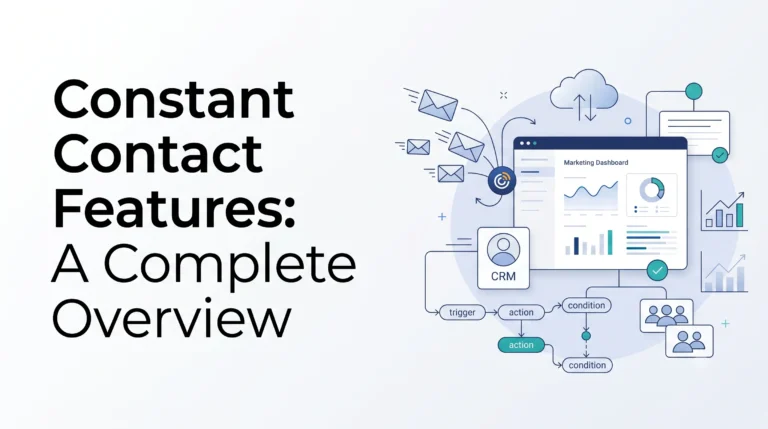
While most platforms offer basic autoresponders, Campaigner provides highly granular, multi-channel automation workflows. Users can combine email actions with SMS text messaging triggers within the same visual builder. This allows a company to nurture a lead via email and send an automated SMS text confirmation once a key action is taken. Discover more about setting up these advanced digital systems in our guide, Marketing Automation Explained.
2. Deep Multivariate Testing
Most entry-level marketing software limits testing to simple A/B splits on email subject lines. Campaigner allows for multivariate testing, meaning you can test up to five distinct elements of a single campaign simultaneously—including the sender name, email body layout, imagery, and call-to-action buttons. The platform then analyzes the performance and automatically deploys the winning variant to the remainder of your list.
3. Advanced Audience Segmentation
Campaigner features an exceptionally powerful segmentation engine capable of handling complex conditional logic. Marketers can build segments using nested “AND/OR” statements, filtering users simultaneously by geographic location, past email engagement, specific website page visits, and purchase amounts. For a strategic breakdown of how to organize your database effectively, read our Audience Segmentation Guide.
4. Detailed Email Analytics and Reporting
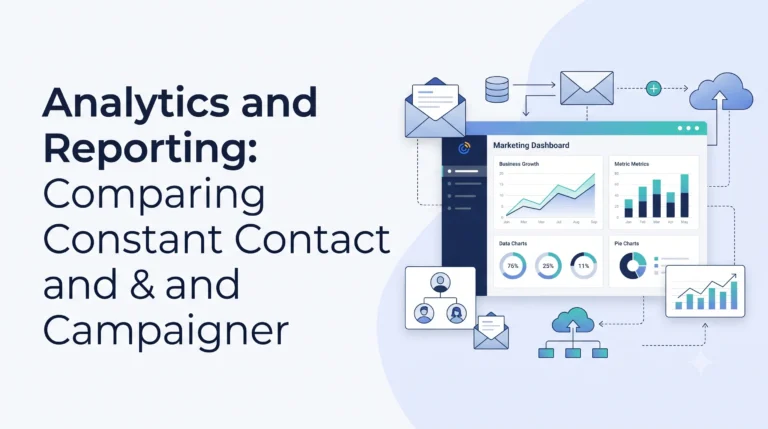
Data transparency is vital for optimizing marketing return on investment. Campaigner goes beyond basic open and click tracking, offering detailed heat maps that show exactly where users click within an email layout, along with domain-level tracking to see if specific providers (like Gmail or Yahoo) are sending your messages to the spam folder. To understand how to decode these data points, consult our Email Analytics Guide.
The Benefits of Using Campaigner
For the right organization, implementing Campaigner unlocks major operational benefits that directly improve campaign performance and workflow efficiency.
Exceptional Deliverability and Dedicated IP Management
For companies sending tens of thousands of messages weekly, maintaining a clean reputation with internet service providers is a continuous battle. Campaigner provides dedicated IP addresses for high-volume senders, separating your sender reputation completely from other companies and ensuring your emails reach the inbox reliably.
Advanced Personalization via Dynamic Content
Campaigner allows users to insert dynamic content blocks directly into an email design. This means two different subscribers opening the exact same email will see entirely different images or product offers based on their past buying habits, creating a highly customized experience without requiring you to build separate campaigns.
Highly Scalable API and Integrations
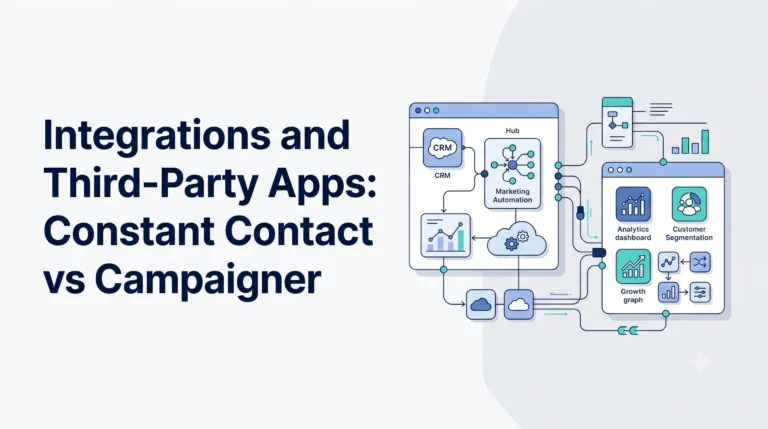
The platform features a robust, well-documented API that allows corporate development teams to sync the email system directly with proprietary customer relationship management (CRM) systems, e-commerce backends, and customer databases.
The Challenges of Using Campaigner
No software tool is perfect for every single scenario. Understanding the limitations of Campaigner is essential for making an unbiased, practical buying decision.
- Steeper Learning Curve: Due to its advanced feature set and focus on data structures, the user interface can feel overwhelming for absolute beginners who just want to send basic, text-based updates.
- Premium Pricing Tiers: Campaigner is an enterprise tool, and its pricing reflects that positioning. It lacks the permanent free tiers found in some beginner platforms, making it a larger financial commitment for small startups with limited budgets.
- Template Design Constraints: While it features a functional drag-and-drop builder, its standard template library focuses more on traditional, corporate layouts rather than the trendy, ultra-modern designs found in platforms catering heavily to creative freelancers.
Comparing Popular Email Marketing Platforms
To see where Campaigner stands in the current software marketplace, it helps to compare it against other well-known email marketing platforms.
| Feature / Attribute | Campaigner | Mailchimp / Brevo | ActiveCampaign | Constant Contact / GetResponse |
|---|---|---|---|---|
| Primary Target Audience | High-volume senders, mid-market businesses | Startups, small businesses, content creators | Mid-sized teams needing advanced CRM features | Small businesses, local services, beginners |
| Automation Complexity | High (supports complex nested logic & SMS) | Medium (focused on user-friendly journeys) | High (deep focus on sales pipelines) | Low to Medium (straightforward triggers) |
| Testing Capabilities | Advanced Multivariate (up to 5 variants) | Standard A/B Testing | Standard A/B Testing | Standard A/B Testing |
| Deliverability Tools | Dedicated IP options, domain health monitoring | Shared IP pools, basic authentication guides | Shared & Dedicated options, deliverability coaching | Shared IP pools, straightforward setup support |
| Interface Style | Technical, data-focused, corporate | Visual, modern, highly intuitive | CRM-centric, visual workflow builder | Clean, simple, minimalist layout |
Best Use Cases: Who Should Choose Campaigner?
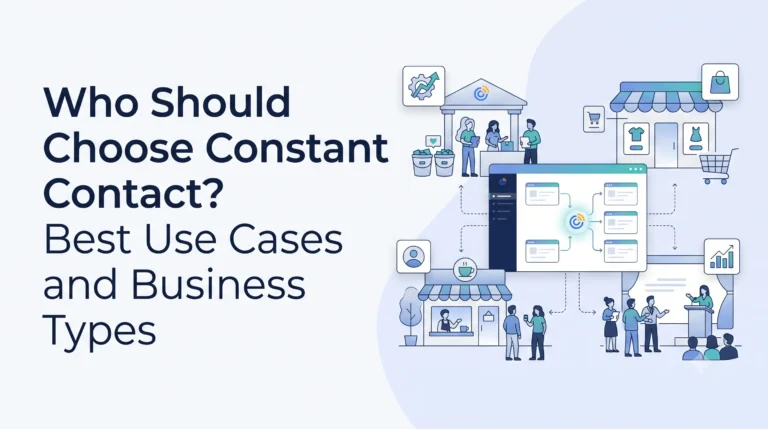
Based on its technical architecture, feature set, and pricing model, Campaigner is best suited for specific business types and operational use cases.
High-Volume E-commerce Brands
E-commerce businesses with massive product catalogs and large contact lists require advanced automation to maximize sales. Campaigner thrives in this environment by allowing brands to set up intricate cart abandonment tracks, personalized product recommendations via dynamic content, and automated post-purchase loyalty campaigns.
Data-Driven Mid-Market to Enterprise Marketing Teams
If your marketing strategy relies heavily on continuous experimentation and hard data, Campaigner’s multivariate testing features are incredibly valuable. Teams can run complex, multi-layered tests across thousands of contacts to scientifically determine the absolute best messaging combinations.
Businesses Requiring Multi-Channel SMS and Email Integration
For organizations that want to coordinate their email communication directly with mobile text messaging, Campaigner provides a single unified dashboard. This eliminates the need to pay for and connect separate SMS software tools, ensuring a seamless user experience.
Common Mistakes to Avoid When Using Campaigner
If you choose to adopt an enterprise platform like Campaigner, watch out for these common implementation mistakes:
- Underutilizing the Feature Set: Paying for an advanced system but only using it to send generic, unsegmented email blasts wastes your budget. Take the time to set up behavioral segments and automated paths.
- Ignoring Technical Domain Authentication: Even the best enterprise deliverability tools require you to configure your custom domain settings correctly. Ensure your team sets up your SPF, DKIM, and DMARC records immediately upon setup.
- Overcomplicating Your Automated Workflows: It is easy to build automation paths that are so complex they become impossible to troubleshoot. Start with simple three-step sequences, test them thoroughly, and add layers of complexity only when necessary.
Real-World Use Case Scenarios
Let’s look at two practical examples to illustrate how choosing the right tool format impacts business workflows.
Scenario A: The Growing B2B SaaS Enterprise
A software-as-a-service (SaaS) company has outgrown its basic email tool. They need to segment users by trial status, software usage frequency, and business size.
By choosing Campaigner, their development team uses the robust API to connect their app database to the email engine. They build multi-step automated onboarding paths that send educational tips to trial users, successfully increasing their trial-to-paid conversion rates.
Scenario B: The Local Creative Studio
A local portrait photography studio wants to send a seasonal newsletter to 500 local clients. They don’t need complex API integrations, SMS tools, or multivariate testing.
For this business type, choosing an enterprise platform like Campaigner would be an inefficient use of budget. They would be better served by a simpler, more visually-focused, budget-friendly beginner platform.
Selection Checklist: Is Campaigner Right for Your Business?
Run through this practical operational checklist to determine if Campaigner aligns with your current technical and marketing requirements:
- [ ] Your contact list exceeds 5,000 active subscribers, or is growing rapidly.
- [ ] You need to send combined Email and SMS workflows from a single interface.
- [ ] Your team requires deep multivariate testing (testing more than 2 variants at once).
- [ ] You have technical resources or a marketer capable of navigating a data-heavy interface.
- [ ] You require a dedicated IP address to protect your independent sender reputation.
Frequently Asked Questions
Is Campaigner easy for a complete beginner to learn?
Campaigner has a steeper learning curve than standard, entry-level tools. While it features drag-and-drop builders, its core value lies in its data segmentation, API connectivity, and advanced testing suites, making it better suited for individuals with some marketing experience or technical backgrounds.
Can I send SMS text messages through Campaigner?
Yes. Campaigner supports multi-channel marketing automation, allowing you to build workflows that combine both email campaigns and automated SMS text messages within a single visual builder dashboard.
Does Campaigner offer a completely free plan?
No. Unlike some beginner platforms that offer restricted free plans for tiny lists, Campaigner is an enterprise-tier service that requires a premium subscription. However, they typically offer full-featured free trials so businesses can test the interface before committing financially.
What is multivariate testing, and why does it matter?
Standard A/B testing allows you to compare two versions of an email (Version A vs. Version B). Multivariate testing allows you to test up to five different elements simultaneously (such as different subject lines, body text, and images combined). This provides faster, deeper data insights for large-volume senders.
How does Campaigner protect my sender reputation?
Campaigner provides robust deliverability monitoring tools, enforcement of clean list practices, and dedicated IP address options. This ensures your campaigns are completely isolated from the sending behaviors of low-quality or spam-heavy accounts on shared networks.
Conclusion
Campaigner is a highly powerful, enterprise-grade email marketing and automation platform that delivers exceptional value to high-volume senders, e-commerce brands, and mid-market companies who rely heavily on complex data segmentation and multivariate testing. Its emphasis on advanced deliverability, dedicated IP options, and integrated SMS workflows makes it a robust infrastructure for growing businesses.
However, if you are a solo freelancer, a tiny startup, or a local shop looking for a simple, low-cost tool to send basic monthly announcements, the platform’s advanced features and premium pricing model may exceed your current operational needs.
Always align your software selection with your current list size, your team’s technical capacity, and your overarching marketing goals. For a final step-by-step framework on making your choice, dive into our comprehensive guide, How to Choose an Email Marketing Platform.