In the rapidly evolving landscape of 2026 marketing technology, choosing the right email and customer relationship management (CRM) platform is a high-stakes decision. The software you select will dictate not only how effectively you communicate with your audience but also how much of your profit margin is consumed by monthly subscription fees. Return on Investment (ROI) in email marketing is a two-sided equation: you must maximize the top-line revenue generated by your campaigns while ruthlessly minimizing the bottom-line software costs required to execute them.
Business owners, e-commerce experts, and marketing agencies frequently find themselves at a critical crossroads: Do you invest in a highly specialized, enterprise-grade email platform, or do you adopt a unified, omni-channel ecosystem that prices based on volume?
This dilemma is perfectly encapsulated in the comparison between Brevo (formerly Sendinblue) and Campaigner. Campaigner has long been heralded as a premium, corporate-level solution, boasting extreme automation branching, multivariate testing, and high-volume deliverability. Brevo, on the other hand, has disrupted the market by offering an all-in-one suite (Email, SMS, WhatsApp, CRM) that completely eliminates the dreaded “contact tax” by billing solely based on the number of emails you send.
This comprehensive, data-driven guide breaks down the core architecture, multi-channel capabilities, and pricing models of both platforms. By the end, you will know exactly which platform offers the superior ROI for your specific business model.
1. Executive Summary / Quick Verdict
Plaintext
+---------------------------------------------------------------------------------------+
|                                  EXECUTIVE VERDICT                                    |
+---------------------------------------------------------------------------------------+
| Best For:                                                                             |
| - Brevo is the ultimate choice for small-to-medium businesses (SMBs), growing         |
|   e-commerce brands, and marketing agencies seeking a unified omni-channel platform.  |
|   With its per-email pricing and unlimited contact storage, it provides unbeatable    |
|   ROI for companies scaling their audience.                                           |
|                                                                                       |
| - Campaigner is best for corporate-level senders, large enterprises, and technical    |
|   marketing operations teams that require advanced multivariate A/B testing (up to    |
|   30 variants) and hyper-complex workflow branching, justifying a premium price.      |
|                                                                                       |
| Consider Alternatives If:                                                             |
| - You run a purely direct-to-consumer (D2C) e-commerce brand that relies heavily on   |
|   deep, algorithmic machine-learning predictive models for product recommendations    |
|   (consider Klaviyo).                                                                 |
| - You need native, built-in payment processor integrations (like Stripe) without      |
|   relying on third-party webhook latency.                                             |
+---------------------------------------------------------------------------------------+
2026 Scorecard Rating
Brevo Scorecard:
- Ease of Use: 4.6 / 5
- Deliverability: 4.7 / 5
- Multi-Channel Features: 4.9 / 5
- Automation: 4.3 / 5
- Value for Money: 5.0 / 5
- Overall Score: 4.7 / 5
Campaigner Scorecard:
- Ease of Use: 3.8 / 5
- Deliverability: 4.9 / 5
- Multi-Channel Features: 3.5 / 5
- Automation: 4.9 / 5
- Value for Money: 3.6 / 5
- Overall Score: 4.1 / 5
2. Core Features Breakdown (In-Depth Analysis)
To understand where your software budget is best deployed, we must evaluate the core functional modules that dictate day-to-day marketing operations.
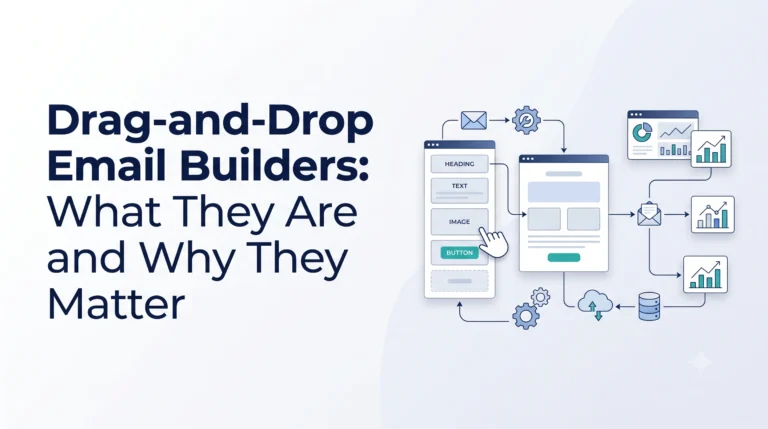
Email Marketing & Drag-and-Drop Editor
The speed at which your team can ideate, design, and deploy a campaign directly impacts your agility in the market.
- Brevo: Brevo focuses heavily on usability and speed. Its drag-and-drop editor is block-based, ensuring that every template is perfectly responsive across notoriously difficult clients like desktop Outlook and mobile Gmail. Brevo offers over 70 modern templates and allows for dynamic personalization, meaning you can conditionally show or hide specific content rows based on a contact’s attributes or past behavior. Furthermore, Brevo has integrated its “Aura” AI assistant into its lower tiers, offering AI-driven content generation to speed up the copywriting process.
- Campaigner: Campaigner is built for corporate scale. It boasts an expansive library of over 900 customizable templates. Where it truly distances itself is in its multivariate testing capabilities. Users can build a test with up to 5 subject lines and 3 content variations (testing up to 30 combinations simultaneously). The system automatically determines statistical significance and routes the winning variant to the remainder of your list. For enterprise teams optimizing for marginal gains at a massive scale, this feature is invaluable.
Multi-Channel Campaigns (SMS, WhatsApp, Web Push, and Live Chat)
Operating a marketing strategy in an email-only silo is a vulnerability in 2026. Today’s consumers expect seamless communication across their preferred platforms.
- Brevo: Brevo operates as a true omni-channel communication engine. From a single dashboard, you can orchestrate email, SMS, and official WhatsApp Business API campaigns. WhatsApp campaigns allow for rich-media messages (images, videos, interactive buttons) and capture open rates that frequently exceed 90%. Brevo also provides a customizable on-site Live Chat widget and browser-level Web Push notifications (supporting up to 1,000 targeted subscribers even on the Starter plan).
- Campaigner: Campaigner focuses purely on premium email delivery. While it does offer rudimentary SMS capabilities as an add-on, it lacks the deep, native integration of WhatsApp and live chat found in Brevo. If your strategy relies on an integrated, multi-channel customer journey, Campaigner will require you to purchase and duct-tape together external software via Zapier or custom APIs.
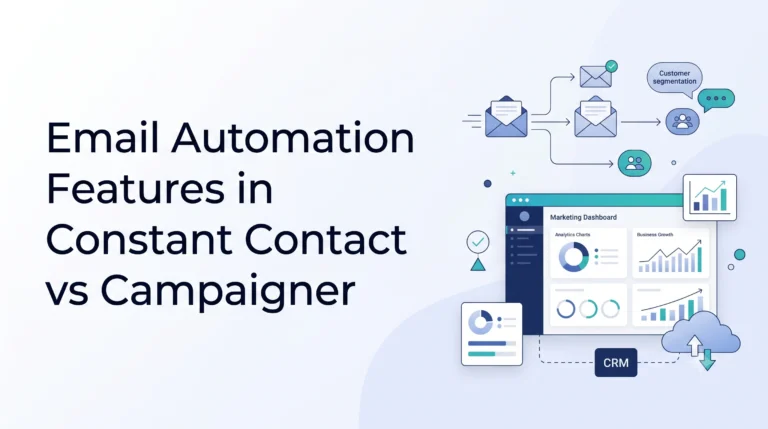
Marketing Automation & Workflows
Behavioral automation is the engine that drives passive revenue. Both platforms handle automation, but their depth varies significantly.
- Brevo: Brevo provides a clean visual workflow builder that supports event-based triggers, such as abandoned cart sequences, welcome onboarding series, and website page-visit tracking. It handles standard multi-channel branching (e.g., sending an SMS if an email goes unopened). While highly effective for 90% of SMB needs, the true marketing automation features unlock at the Standard plan ($18/month), and hyper-advanced AI segmentation and contact scoring are reserved for the Professional tier ($499/month).
- Campaigner: Automation sophistication is where Campaigner wins decisively. It provides enterprise-grade, multi-branching visual workflows that can route contacts through incredibly complex logic trees based on minute shifts in engagement, demographic data, and external API payloads. If your business model requires hyper-segmented, multi-variable logic to trigger distinct customer journeys, Campaigner provides the necessary architectural depth.
Sales CRM & Pipeline Management
Closing the loop between marketing lead generation and direct sales follow-up reduces friction and increases conversion rates.
- Brevo: Brevo provides foundational Sales CRM tools bundled directly into its platform, giving businesses a unified view of the customer journey alongside their email metrics. Users can set up basic visual pipelines and track deals. For more advanced features, Brevo offers dedicated Sales CRM packages (Sales Essentials at $31/month or Sales Advanced at $64/month), which add deeper task management, customized chatbot scenarios, and advanced sales automation.
- Campaigner: Because Campaigner focuses purely on enterprise email execution, it lacks built-in Sales CRM capabilities. You will be entirely reliant on external CRM integrations (like Salesforce or HubSpot) to handle active deal pipelines and sales representative task tracking.
Transactional Emails (SMTP Relay, API Integration, High Deliverability)
For e-commerce and SaaS brands, the delivery of order receipts, password resets, and shipping notifications is mission-critical.
- Brevo: Brevo originated as a dedicated transactional delivery network. It includes enterprise-grade SMTP relay credentials and documented REST APIs natively within its low-cost plans. Transactional streams are isolated to guarantee rapid delivery. However, because Brevo offers a generous free tier, its shared IP pools require users to strictly authenticate their domains to maintain top-tier deliverability. Dedicated IPs are available as a paid add-on ($251/year) for high-volume senders (100k+ emails/month).
- Campaigner: Campaigner is widely recognized for corporate-level delivery, consistently boasting 90%+ inbox placement rates. Its stringent vetting processes for new accounts ensure that its shared IP pools maintain pristine reputations. For enterprises where a 2% drop in deliverability equates to thousands of dollars in lost revenue, Campaigner’s infrastructure is highly reliable.
3. The Pricing Model Advantage
The most glaring discrepancy between Brevo and Campaigner lies in their underlying billing architectures. This singular difference will largely dictate your ROI.
Campaigner: The Contact Tax
Campaigner utilizes a traditional contact-based pricing model. You are billed for the total number of contacts stored in your database, regardless of how often you email them.
- The entry-level plan starts at $14 per month for up to 1,000 contacts.
- As your list grows to 10,000 contacts, the price scales aggressively to approximately $179 per month.
- This model severely penalizes businesses for lead generation, forcing marketers to constantly prune their lists or pay exorbitant storage fees for seasonal or unengaged buyers.
Brevo: The Volume-Based Model
Brevo disrupts this industry norm by offering unlimited contact storage across all plans (technically up to 100,000 on the Free plan, which is massive for a free tier). You are billed exclusively for the volume of emails you transmit in a given month.
Breakdown of Brevo Tiers:
- Free Tier ($0/month): An exceptionally generous entry point. Store up to 100,000 contacts and send up to 300 emails per day (roughly 9,000/month). It includes the drag-and-drop editor, transactional SMTP, and basic reporting.
- Starter Plan (From $9/month): Starts at 5,000 emails per month and removes the daily sending cap. It unlocks basic AI content generation and web push (up to 1,000 subscribers). Note: Removing the Brevo logo from email footers requires an additional $9 to $10.80/month add-on at this tier.
- Standard / Business Plan (From $18/month): The sweet spot for most businesses. Unlocks full marketing automation, A/B testing, click heatmaps, AI send-time optimization, and 1 landing page. Scaling up to 20,000 emails per month costs roughly $69/month.
- Professional / Enterprise (From $499/month / Custom): A significant price jump designed for scaling teams. Includes native WhatsApp messaging, web/mobile push, AI predictive segmentation, 10 user seats, and a dedicated deliverability specialist.
The ROI Math: For a business with 50,000 contacts that sends two newsletters a month (100,000 sends), Brevo’s Standard/Business plan would cost approximately $80/month. On Campaigner, a 50,000-contact list would cost hundreds of dollars more per month.
4. Pros & Cons (Balanced & Objective)
Brevo Strengths (Pros)
- Unlimited Contact Storage: Never pay a contact tax. Store massive lead lists and seasonal shoppers without incurring monthly database maintenance penalties.
- Affordable Omni-Channel Execution: Access native SMS, live chat, and transactional SMTP routing within a single dashboard for less than $25/month.
- Built-In CRM Capabilities: Consolidate your inbound marketing and basic sales tracking without paying for a separate CRM platform.
- Generous Free Tier: The 300-email daily allowance provides genuine utility for small projects, staging apps, and early-stage bootstrapped startups.
Brevo Limitations (Cons)
- Steep Jump to Premium Features: There is a massive pricing gap between the Standard plan ($18/mo) and the Professional plan ($499/mo), putting advanced features like WhatsApp and AI segmentation out of reach for mid-budget brands.
- Strict Daily Cap on Free Tier: The 300-email daily sending limit means a sudden spike in signups could cause emails to queue or fail until the next day.
- Branding Add-On: On the Starter plan, removing the “Sent with Brevo” watermark requires a paid monthly add-on.
Campaigner Strengths (Pros)
- Enterprise Multivariate Testing: Test up to 30 combinations of subject lines and content simultaneously to mathematically guarantee the highest conversion rates.
- Hyper-Advanced Workflows: Build incredibly complex, multi-branching automation logic tailored for corporate-level segmentation.
- Pristine Deliverability: Stringent network monitoring ensures consistent 90%+ inbox placement across major mailbox providers.
Campaigner Limitations (Cons)
- Expensive Contact Tax: The pricing model heavily penalizes businesses with large, low-engagement lists.
- Lack of Omni-Channel Native Tools: Requires third-party integrations for WhatsApp, live chat, and modern web push notifications.
- No Native CRM: Forces reliance on external tools like Salesforce to manage sales pipelines.
5. Competitor Comparison Table
Below is an objective comparison showing how Brevo and Campaigner stack up against other major industry players across pricing methodology and core feature sets.
| Feature / Platform | Brevo | Campaigner | Mailchimp | ActiveCampaign | Klaviyo |
|---|---|---|---|---|---|
| Pricing Structure | Per Email Sent | Per Contact Count | Per Contact Count | Per Contact Count | Per Contact Count |
| Contact Limits | Unlimited (Volume based) | Tiered Caps | Tiered Caps | Tiered Caps | Tiered Caps |
| Multi-Channel | Email, SMS, WhatsApp | Email, SMS (Add-on) | Email, Basic SMS | Email, SMS | Email, SMS |
| Built-in Sales CRM | Yes (Basic included) | No | No (Audience tags) | Yes (Plus tier & up) | No |
| Transactional Email | World-Class (Included) | N/A natively | Paid Add-on | Postmark Add-on | Basic API |
| Advanced A/B Testing | Standard A/B | Multivariate (30x) | Basic | Advanced | Advanced |
| Best For | SMBs, Budget Scalers | Corporate Enterprises | Beginners | Complex B2B | High-Volume D2C |
6. Step-by-Step Setup & Migration Guide
Migrating your marketing operations to a new platform requires precision to protect your sender reputation and ensure data continuity. Follow this 4-step framework for a secure migration to either Brevo or Campaigner:
Step 1: Account Creation & Technical Domain Authentication (SPF, DKIM, DMARC)
Before importing a single contact, you must authenticate your sending domain to ensure high deliverability and bypass aggressive spam filters.
- Register your account and complete your organizational sender profile.
- Navigate to the platform’s Domains & Dedicated IPs settings and add your sending domain.
- Log into your domain’s DNS host (e.g., Cloudflare, GoDaddy, AWS Route 53) and add the required authentication records:
- SPF (Sender Policy Framework): Authorizes the platform’s MTAs to deliver emails on your domain’s behalf.
- DKIM (DomainKeys Identified Mail): Attaches a cryptographic signature verifying message integrity.
- DMARC (Domain-based Message Authentication): Defines strict security handling for unauthorized domain use.
Step 2: Clean and Export Your Legacy List
Migrating “dead weight” will severely damage your new IP reputation.
- In your legacy platform, segment and permanently archive all hard bounces, spam complaints, and completely inactive contacts (e.g., users who haven’t opened an email in 12 months).
- Export the clean, active master database as a
.CSVfile.
Step 3: Importing Contacts and Mapping Attributes
- In your new platform (e.g., Brevo), navigate to Contacts > Lists. Create your target folder structure (e.g., Active Subscribers, VIP Customers).
- Click Import Contacts and upload your clean
.CSVfile. - Map Attributes: Carefully match your CSV columns (First Name, Purchase History, Custom Fields) to the internal attributes so your dynamic personalization tags function correctly.
Step 4: Replicate Templates, Automations & Warm Up Your IP
- Export your best designs as raw HTML or use the new visual editor to rapidly recreate your newsletters with improved mobile responsiveness.
- Recreate your essential automated workflows (like the Welcome Series or Abandoned Cart).
- The Warm-Up Launch: Do not blast your entire list immediately. Send your first campaign exclusively to your most highly engaged segment (users who clicked an email in the last 14 days) to establish a pristine domain reputation on your new routing infrastructure.
7. Final Recommendation & Call to Action
The decision between Brevo and Campaigner crystallizes the choice between incredible all-in-one value and specialized corporate execution.
If your organization employs dedicated marketing automation engineers and requires hyper-complex, multi-branch journey funnels with 30-variant multivariate testing, Campaigner is a legitimate enterprise software solution that justifies its premium price point. Its 90%+ inbox placement reliability provides peace of mind for mission-critical corporate sending.
However, for the vast majority of small-to-medium businesses (SMBs), growing e-commerce merchants, and marketing agencies, Brevo delivers substantially higher ROI. By bundling SMS, WhatsApp, a Sales CRM, transactional routing, and landing pages into a platform that entirely eliminates the contact storage tax, Brevo empowers you to aggressively acquire market share without software cost inflation. The math is simple: paying for the emails you actually send is vastly superior to paying for the contacts sitting idle in your database.
Ready to stop paying the contact tax and unlock a true all-in-one marketing suite?