When a consumer hands over their email address to a business, they are not just sharing a piece of contact data. They are granting that business explicit permission to bypass public algorithms and speak to them directly.
For software review platforms, e-commerce stores, and digital service providers, this direct line of communication is incredibly valuable. If you want to learn how to leverage this channel effectively without frustrating your audience, you need to understand the underlying mechanics of email systems. This beginner-friendly guide explains what email marketing is, how it works, and how to build a strategic foundation that delivers long-term business value.
What Is Email Marketing?
At its simplest, email marketing is a digital marketing strategy that involves sending targeted emails to a specific list of subscribers who have explicitly opted in to receive communications from your business. It is a core pillar of a broader online presence, acting as a direct bridge between your initial lead acquisition efforts and your long-term retention goals.
Unlike broad public advertisements, email marketing operates on a permission-based model. You cannot simply buy a random list of email addresses and start blasting messages without breaking compliance laws and ruining your domain reputation.
Instead, a successful email strategy focuses on attracting interested website visitors, securing their voluntary subscription, and delivering continuous value directly to their inboxes. For a deeper look at how this fits into the broader internet landscape, you can read our foundational guide: What Is Digital Marketing?
Why Email Marketing Is Crucial for Modern Business Strategy
With the continuous rise of social media apps, instant messaging networks, and search engine changes, it is easy for beginners to wonder if email is outdated. However, the data and performance metrics consistently show that email remains one of the most stable and high-yielding channels in the entire digital marketing space.
Complete Direct Asset Ownership
When you build a massive following on a social media network, you do not actually own that audience asset. The platform’s creators control the distribution algorithm, meaning they can cut your organic reach overnight or charge you to reach your own followers.
An email list is a completely independent asset. You own the data entirely, allowing you to migrate to any software provider you prefer without losing a single connection.
Unmatched Financial Return on Investment (ROI)
Because email delivery costs only a fraction of a cent per message, the financial efficiency of this channel is unmatched. Industry studies consistently show that email marketing generates an average return of $36 to $40 for every single dollar invested. This makes it an incredibly low-risk, high-reward strategy for growing businesses and lean startups alike.
Superior Personalization and Context
Public advertisements must appeal to a broad, generalized demographic to be cost-effective. Email software allows you to slice your audience list into hyper-targeted groups based on specific actions, interests, or purchase histories. Sending tailored messages to distinct groups ensures your communications feel relevant and deeply personalized, which naturally drives higher conversion rates.
How Email Marketing Works: The Step-by-Step Mechanism
To the untrained eye, email marketing looks like typing a message and clicking “send.” Behind the scenes, however, a multi-step technical process ensures your emails safely bypass spam filters and land beautifully on your subscriber’s device screen.
The complete operational flow generally follows this sequence:
[Lead Capture]      --> Visitor inputs their email into an online signup form.
[Data Syncing]      --> The form securely pushes the data to an Email Service Provider (ESP).
[Trigger Event]     --> The ESP detects the new user and triggers an automated welcome message.
[ISP Evaluation]    --> Receiving mail servers check your domain credentials and reputation.
[Inbox Delivery]    --> The verified email lands safely in the user's primary inbox folder.
To manage this complex pipeline effectively, you cannot use a personal inbox like Gmail or Outlook. Personal clients restrict high-volume sending and lack critical tracking features. Instead, you must use an Email Service Provider (ESP), which handles subscriber databases, design layouts, compliance requirements, and bulk delivery optimization.
The Core Types of Marketing Emails
A well-rounded email strategy does not rely on a single format. Successful marketers deploy multiple types of messages throughout the customer lifecycle, matching the format to the reader’s current mindset.
1. Promotional Emails
These are the most common emails beginners recognize. Their primary purpose is to drive immediate sales, announce special product discounts, or highlight seasonal store offers. While effective at generating short-term revenue spikes, over-using promotional emails can quickly lead to audience fatigue and high unsubscribe rates.
2. Informational Newsletters
Newsletters focus heavily on content distribution, brand building, and authority. Instead of pitching a product, a newsletter shares recent blog posts, helpful industry news, practical tips, or personal insights. This consistent delivery of value keeps your brand top-of-mind, turning casual subscribers into loyal advocates.
3. Transactional Emails
These are functional, automated messages triggered by a specific customer action. Examples include order confirmations, shipping updates, invoice receipts, and password reset links. Transactional messages enjoy the highest open rates in the industry because users are actively waiting for the critical information inside.
4. Lifecycle and Nurture Sequences
A nurture sequence is a series of automated emails designed to guide a prospect through their decision-making process step by step. For instance, when someone joins your list, they might receive an educational welcome email on day one, a helpful case study on day three, and a direct product offer on day seven. To master these foundational building blocks, read our entry-level breakdown: Email Marketing Basics.
The Strategic Benefits of Implementing Email Marketing
Integrating structured email campaigns into your business workflows unlocks critical advantages that directly optimize your customer acquisition costs.
Lower Customer Acquisition Costs
Acquiring a brand-new customer through paid search or social media ads is expensive. Email marketing allows you to capture that traffic on their first visit and nurture them over time for free. This significantly lowers your overall marketing costs by maximizing the value of every single visitor who lands on your website.
Highly Measurable and Transparent Metrics
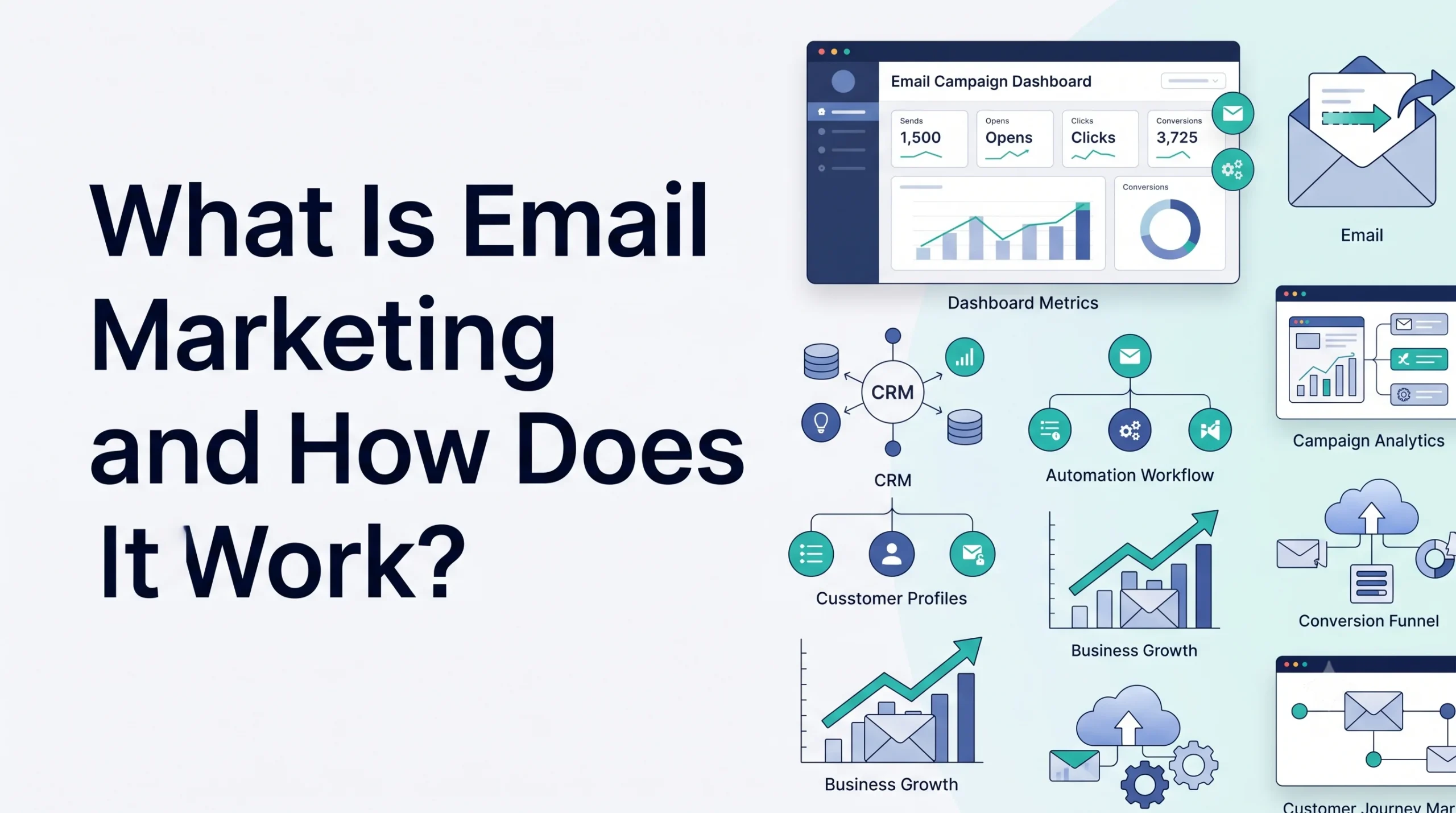
Email systems leave zero room for guessing. Every campaign provides a clear dashboard showing exactly how many people received your message, opened it, clicked a link, or marked it as spam. This high level of transparency allows you to make data-backed adjustments to your copy and design in real time.
Automated, Around-the-Clock Workflows
Once you configure your email automation workflows, they run completely in the background without requiring continuous manual input. Your system will welcome new subscribers, follow up on abandoned shopping carts, and pitch products while your team focuses on other core tasks. To explore how to configure these systems, dive into Marketing Automation Explained.
Key Challenges in Modern Email Marketing
Despite its clear strengths, email marketing requires continuous optimization to overcome several operational hurdles and strict technical guardrails.
- Inbox Deliverability Hurdles: Landing in the inbox is not guaranteed. If your domain reputation is poor, internet service providers (ISPs) will route your messages straight to the spam or promotions folder.
- Strict Regulatory Compliance: Global privacy regulations like CAN-SPAM, GDPR, and CASL carry heavy financial penalties for businesses that send unsolicited emails or fail to include visible, functional unsubscribe options.
- List Decay and Attrition: On average, an email list naturally degrades by roughly 20-25% per year as users change jobs, abandon old accounts, or lose interest. Continuous lead generation is required to keep your database healthy.
- Inbox Attention Deficit: The average professional receives dozens of emails daily. Standing out requires crafting exceptionally strong subject lines and providing undeniable value in every single message.
Comparing Email Marketing Platforms to Social Media
To clarify why email deserves a dedicated place in your growth plan, let’s contrast its core traits against public social media marketing.
| Strategic Feature | Email Marketing Channels | Social Media Networks |
|---|---|---|
| Audience Ownership | Absolute ownership of data and lists | Third-party platform holds complete control |
| Organic Distribution | Reaches nearly 100% of valid inboxes | Restricted by shifting corporate algorithms |
| Content Longevity | Sits safely in the inbox until organized | Disappears from user feeds within a few hours |
| Personalization | High (tailored by behavior and tags) | Low (one-to-many public broadcasting) |
| Direct ROI Tracking | Highly precise from click to checkout | Complex (requires multi-touch attribution) |
Best Practices for Email Marketing Success
To build a healthy, highly engaged subscriber list that generates reliable conversions, follow these core industry best practices:
- Never Buy Email Databases: Purchased lists are packed with dead accounts, spam traps, and users who have no idea who you are. Focus entirely on organic, opt-in list building to protect your long-term sender reputation.
- Segment Your List Continuously: Avoid sending identical broadcast messages to your entire database. Segment your readers based on their explicit interests, geographic location, or past interactions to keep your content relevant. Learn how to organize your data with our Audience Segmentation Guide.
- Optimize for Mobile Screens: Over 50% of all emails are opened on smartphones and tablets. Use single-column layouts, clean fonts, and large, easily clickable buttons to ensure a smooth reading experience on small screens.
- Monitor Your Core Metrics Weekly: Keep a close eye on your key performance indicators. High open rates show your subject lines are engaging, while strong click-through rates prove your content is valuable. For a complete breakdown of these figures, see our Email Analytics Guide.
Common Mistakes Beginners Should Avoid
Steer clear of these common pitfalls to keep your sender reputation safe and your audience engaged:
- Writing Misleading Subject Lines: Using clickbait or deceptive subject lines might spike your open rates temporarily, but it destroys user trust and drives up spam complaints instantly.
- Neglecting List Hygiene: Keeping inactive subscribers on your list drives down your overall open rates and signals to email providers that your content is unengaging. Regularly clean out accounts that have not interacted with your emails for several months.
- Sending Without Testing First: Always send a test copy of your campaign to your own inbox before broadcasting to thousands of users. Broken links, distorted images, and formatting errors look unprofessional and hurt conversion rates.
Real-World Strategic Implementation Examples
Seeing these concepts applied to practical business models clarifies how to frame your own campaigns.
Scenario A: The Software Review Platform
A website comparing project management software wants to build authority. Instead of purely publishing articles, they offer a free downloadable PDF comparison matrix. When visitors download the sheet, they join an automated email sequence.
Over the next two weeks, the system delivers educational tips on project management frameworks, naturally including objective links to top-tier software reviews.
Scenario B: The Growing E-commerce Store
An online boutique notices that a large percentage of visitors add products to their shopping carts but leave without completing the purchase. They set up an automated behavioral trigger sequence.
Two hours after a cart is abandoned, the system sends a polite reminder email showing the items left behind. If the user does not buy, a follow-up email arrives 24 hours later offering a modest 10% discount, successfully recovering lost revenue automatically.
Choosing the Right Software Solution for Your Strategy
Managing a growing email asset requires selecting an Email Service Provider that matches your technical skill level, business model, and operational budget. The market features a wide array of options, each tailored to specific strategic needs.
When exploring the platform landscape, categorize your choices based on functionality:
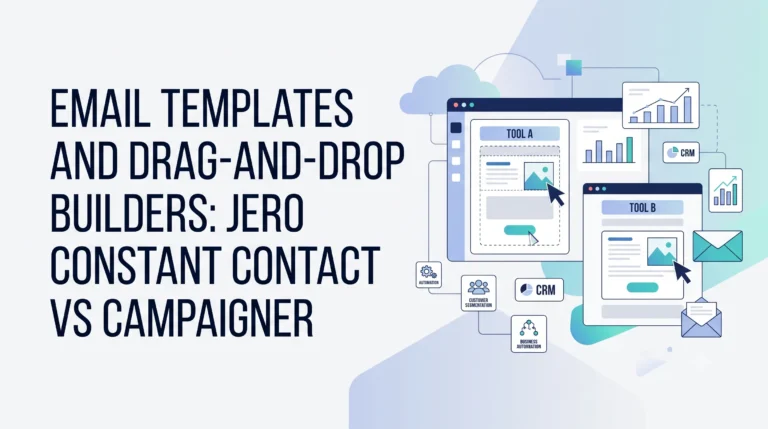
- Entry-Level & Newsletter-Focused Tools: For beginners who want to prioritize visual design, straightforward newsletters, and ease of use, platforms like Mailchimp, Brevo, Constant Contact, or GetResponse are excellent starting options. They provide intuitive drag-and-drop template editors and essential contact management features.
- Advanced Automation Hubs: If your strategy demands complex behavioral pathways, advanced database tagging, and tight CRM integrations, tools like ActiveCampaign or HubSpot offer highly powerful automation engines, though they come with a higher price tag.
- High-Volume Enterprise Delivery: For mature organizations that require absolute control over sender compliance, deep multi-variate testing, and massive scale, systems like Campaigner offer robust delivery structures.
Avoid committing to a costly premium plan on day one. Look for tools that provide transparent free tiers or full-featured trial periods. This allows you to log in, test the visual email builder, explore the contact management settings, and confirm the interface fits your daily workflow before investing your marketing budget. For a comprehensive framework on making this decision, consult our guide: How to Choose an Email Marketing Platform.
Frequently Asked Questions
What is a good open rate for email marketing campaigns?
Across most standard business industries, an average open rate between 15% and 25% is considered healthy. If your open rates consistently drop below 15%, it typically indicates that your subject lines need work, your audience list is uncleaned, or your messages are slipping into the spam folder.
What is the difference between an opt-in and a double opt-in?
A single opt-in adds a user to your email list immediately after they submit their address on your online signup form. A double opt-in adds an extra safety layer by sending a confirmation link to the user’s inbox that they must click before officially joining your database, which helps maintain a high-quality list.
How often should I send marketing emails to my list?
There is no universal rule, but consistency is key. For standard informational newsletters, sending once or twice a week is typically a safe baseline. The goal is to stay visible and top-of-mind without flooding your subscribers’ inboxes and causing unsubscribe spikes.
Can I do email marketing for free?
Yes. Many prominent Email Service Providers offer entry-level free tiers that allow you to store a limited number of contacts and send a set volume of messages each month. This allows beginners to build their lists and see results before spending any money.
What happens if I get a high number of spam complaints?
If your spam complaint rate climbs above 0.1% (one out of every one thousand emails sent), email clients like Gmail and Yahoo will lower your sender score. This causes your future emails to be routed straight to the spam folder, heavily damaging your overall deliverability.
Key Tactical Checklist for Beginners
Complete these fundamental steps to launch your initial email campaigns safely:
- [ ] Selected a verified Email Service Provider that matches your business budget.
- [ ] Positioned an opt-in signup form clearly on your website’s highest-traffic pages.
- [ ] Programmed a clean, automated welcome email to greet new subscribers instantly.
- [ ] Verified your custom domain name settings (SPF, DKIM, DMARC) to maximize deliverability.
- [ ] Designed a basic, mobile-responsive newsletter template for your weekly content updates.
Conclusion
Email marketing is far from outdated—it remains one of the most powerful, personal, and financially efficient communication assets a modern business can build. By shifting away from generic blast promotions and focusing on building an organic, segmented list of engaged subscribers, you create an independent marketing engine that drives steady, automated growth.
Don’t overcomplicate your setup on day one. Focus on capturing emails cleanly, delivering genuine educational value in every send, and monitoring your core engagement data. As your list scales and your workflows mature, you can layer in advanced automation logic and precise segmentation to unlock the full revenue potential of the inbox.