Imagine trying to grow a business in the 1980s. You would have poured money into billboard advertisements, local newspaper slots, or expensive television commercials. Once those ads went live, you crossed your fingers and hoped the right people saw them. There was virtually no way to measure exactly how many sales came from that specific billboard down the highway.
Today, the landscape looks entirely different. A small business owner sitting at a kitchen table can launch an ad campaign that reaches millions of highly targeted people across the globe. Even better, they can track every single click, purchase, and dollar spent in real-time.
This shift is entirely due to digital marketing. Whether you are an aspiring entrepreneur, a traditional marketer looking to upgrade your skills, or a student trying to understand the modern business world, this comprehensive guide will break down everything you need to know about navigating the online marketing ecosystem.
What is Digital Marketing?
At its core, digital marketing refers to any marketing effort that uses an electronic device or the internet to connect with customers. Instead of using physical media like print ads or direct mail, businesses leverage digital channels such as search engines, social media, email, and websites to reach their target audience.
If a marketing campaign happens online, it falls under the umbrella of digital marketing. While traditional marketing still has its place, the digital realm offers unprecedented access, flexibility, and precision.
To fully understand how this space works, it helps to look at the three primary categories of digital media:
- Owned Media: Digital assets that your company fully owns and controls. Examples include your website, your blog, your email subscriber list, and your organic social media profiles.
- Paid Media: Any channel where you pay to get your content in front of an audience. This includes Google pay-per-click (PPC) ads, sponsored social media posts, and display banners.
- Earned Media: Organic exposure that you do not pay for and do not directly control. This includes customer reviews, word-of-mouth recommendations on forums, press coverage, or user-generated content shared on TikTok and Instagram.
Why Digital Marketing Is Crucial in the Modern Era
Consumers no longer just buy things online; they live online. Before making almost any purchasing decision—whether buying a new mattress or hiring a local plumber—people turn to the internet to research, compare, and read reviews. If your business does not have a digital footprint, you essentially do not exist to a massive portion of your potential market.
Global vs. Local Reach
Traditional advertising restricts your business geographically. A billboard only targets people driving down one specific street. Digital marketing completely removes these boundaries. A local boutique can use e-commerce to sell clothes to customers on the other side of the planet. Conversely, a local service provider can use hyper-local targeting to ensure their ads only appear to people within a five-mile radius of their shop.
Cost-Effectiveness
For small businesses and startups, traditional advertising can be prohibitively expensive. Buying a 30-second television ad spot can cost thousands of dollars before you even factor in production costs. Digital marketing allows businesses to start with tiny budgets. You can run a social media ad campaign for as little as $5 a day, test what works, and scale up your spending only when you see a positive return on investment.
Measurable Results
The single greatest advantage of online marketing is data tracking. When you distribute a flyer, you cannot tell how many people read it or threw it straight into the recycling bin. With digital tools, you can track precise metrics. You can see exactly how many people viewed an ad, clicked your link, signed up for your newsletter, and completed a purchase. This allows businesses to optimize their strategies constantly based on hard numbers rather than guesswork.
How Digital Marketing Works
Digital marketing functions as a structured ecosystem where different channels work together to guide a prospect through the buyer’s journey. This journey is often visualized as a marketing funnel, which transforms strangers into paying customers.
[Top of Funnel: Awareness]    --> Attract visitors via SEO, Social Media, or Paid Ads
[Middle of Funnel: Interest]  --> Engage them on your Website or via Blog Content
[Bottom of Funnel: Decision]  --> Convert leads into customers using Email Marketing
The process begins by attracting attention at the top of the funnel. Once an individual interacts with your brand, you guide them down the funnel by providing value, building trust, and answering their questions. Finally, when they are ready to make a decision, you present a clear call to action to secure the sale.
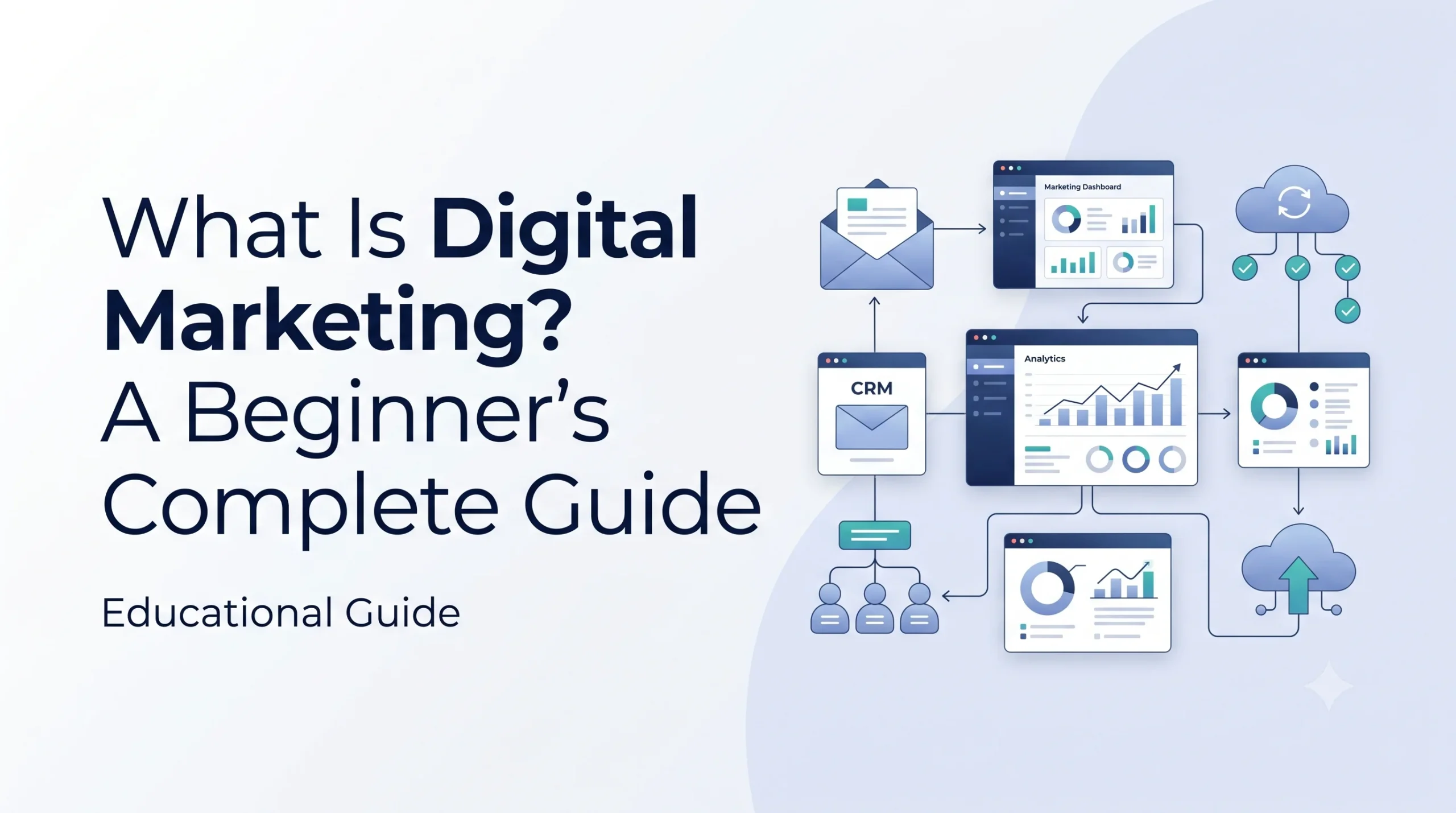
Every campaign relies on data. Marketers use tracking scripts (often called pixels or tags) on their websites to monitor visitor behavior. This data feeds into analytics dashboards, allowing teams to see which channels are driving profits and which ones need adjustment.
Core Types of Digital Marketing Channels
To build a successful online strategy, you need to understand the different building blocks available to you. Let’s explore the primary pillars of modern digital marketing.
1. Search Engine Optimization (SEO)
SEO is the art and science of optimizing your website so that it ranks highly on search engines like Google for relevant keywords. When someone types a query into a search bar, you want your website to appear at the very top of the organic (unpaid) results.
- On-Page SEO: Focuses on the content that lives on your website pages. This includes optimizing your text, using relevant target keywords, writing descriptive headings, and ensuring high-quality copy.
- Off-Page SEO: Focuses on actions taken outside of your own website to impact your rankings. The primary driver here is earning high-quality backlinks (links from other reputable websites to yours), which act as votes of confidence in the eyes of search engines.
- Technical SEO: Focuses on the backend structure of your site. This includes improving page load speed, making sure your site is mobile-friendly, and creating a clean XML sitemap so search engine bots can easily crawl and index your pages.
2. Content Marketing
Content marketing focuses on creating and distributing valuable, relevant, and consistent content to attract and retain a clearly defined audience. Instead of pitching your products directly, you provide educational or entertaining material that solves real consumer problems.
Common content formats include blog posts, detailed ultimate guides, whitepapers, infographics, podcasts, and video tutorials. Content marketing works hand-in-hand with SEO; search engines need high-quality content to rank, and consumers need good content to trust a brand.
3. Social Media Marketing
This channel involves using platforms like Facebook, Instagram, LinkedIn, X (formerly Twitter), TikTok, and Pinterest to promote your brand and engage with your audience.
Social media is unique because it allows for two-way communication. It is not just about broadcasting messages; it is about responding to comments, participating in trends, handling customer service inquiries, and building an active community around your brand.
4. Pay-Per-Click Advertising (PPC)
PPC is a model of digital advertising where you pay a fee each time someone clicks on one of your ads. Essentially, it is a way of buying visits to your site rather than earning them organically.
Google Ads is the most popular PPC platform. When you search for a product on Google, the top results labeled “Sponsored” are PPC ads. Advertisers bid on specific keywords, and Google displays the ads based on bid amount and ad relevance. Social media platforms also offer robust PPC options, allowing you to pay to show ads to users based on their demographics, interests, and online behavior.
5. Email Marketing
Despite being one of the oldest forms of digital communication, email marketing remains one of the highest-converting digital marketing strategies. Companies use email to share product launches, offer exclusive discounts, deliver helpful educational newsletters, and nurture long-term relationships with existing customers.
Because people must opt-in to receive your emails, this audience is already highly warm and receptive to your messaging. For a deeper dive into these fundamentals, see our companion guide on Email Marketing Basics .
6. Marketing Automation
As a digital business grows, managing every single customer interaction manually becomes impossible. Marketing automation solves this by using software to automate repetitive marketing tasks.
For example, when a new user signs up for your newsletter, an automation tool can instantly send them a welcome email sequence without a human ever needing to hit “send.” It can also segment users into different lists based on their behavior, ensuring they receive highly personalized content. To explore how these systems operate, check out our resource on Marketing Automation Explained .
Comparing the Pillars: Quick Reference
To help you decide where to focus your initial marketing efforts, let’s look at how these core channels compare across key operational factors.
| Marketing Channel | Time to See Results | Direct Cost | Ideal Primary Goal |
| SEO | Long-term (3–6 months) | Low (Sweat equity/Time) | Sustainable organic traffic growth |
| Content Marketing | Medium to Long-term | Low to Medium | Building authority and trust |
| Social Media | Short to Medium-term | Low (Organic) / High (Paid) | Community engagement and brand awareness |
| PPC Advertising | Instant (Hours) | High (Pay-per-click) | Immediate lead generation and sales |
| Email Marketing | Short-term | Low to Medium | Customer retention and direct conversions |
The Strategic Benefits of a Digital Approach
Transitioning your marketing budget from traditional methods to a comprehensive digital framework provides major structural advantages for long-term growth.
- Precise Audience Targeting: Traditional media casts a very wide net, hoping someone relevant catches it. Digital platforms allow you to drill down into specifics. You can target your ads specifically to 30-to-40-year-old homeowners living in Denver who are interested in organic gardening and own a dog. This precision means very little of your advertising budget is wasted on people who have zero interest in your offer.
- High Flexibility and Agility: If you buy a print ad in a monthly magazine and notice a typo or a pricing mistake, you cannot fix it. The error is locked in until the next print run. With digital marketing, if an ad campaign is underperforming or contains an error, you can pause it, edit the text, or adjust the budget within seconds.
- Leveling the Playing Field: In the traditional business world, a small mom-and-pop shop could never compete with the multi-million dollar advertising budgets of massive corporations. Online, a well-optimized, highly authoritative blog post can outrank a billion-dollar company on Google. Digital marketing rewards relevance, creativity, and user experience over raw spending power.
Overcoming Digital Marketing Challenges
While the benefits are massive, running an online marketing strategy is not without its hurdles. Being aware of these challenges allows you to build a more resilient strategy.
Information Overload and Ad Blindness
Modern consumers are bombarded with thousands of digital messages every single day. Because of this, people have developed “ad blindness”—they naturally tune out banner ads, skip video commercials, and ignore promotional emails. To break through this noise, your marketing cannot simply be loud; it must provide genuine value or entertainment to capture attention.
Constant Algorithm Shifts
Digital marketers are at the mercy of platform algorithms. Google regularly updates its search ranking algorithms, and social media platforms frequently change how organic posts are distributed to users. A strategy that works perfectly this month might lose its effectiveness next month because a platform tweaked its underlying code. Diversifying your marketing channels ensures you are never completely reliant on a single platform’s algorithm.
Data Privacy and Compliance Regulations
Governments around the world are continuously tightening regulations regarding how businesses collect, store, and use consumer data online. Frameworks like the General Data Protection Regulation (GDPR) in Europe and the California Consumer Privacy Act (CCPA) require explicit user consent for tracking. Navigating these compliance rules requires clear privacy policies and transparent data collection practices.
Best Practices for Launching Your First Strategy
If you are starting from scratch, trying to master every single digital channel simultaneously is a recipe for burnout. Follow these fundamental best practices to lay a strong foundation.
Understand Your Target Audience Deeply
Before you write a single blog post or spend a dime on ads, you must define exactly who you are trying to reach. Create detailed buyer personas —semi-fictional representations of your ideal customers based on data and research.
Key Questions to Define Your Persona:
- What is their demographic background (age, occupation, location)?
- What are their primary pain points or daily frustrations?
- Where do they go online to find trustworthy information?
- What obstacles prevent them from buying your type of product?
Maintain Consistent Branding Across Platforms
Your brand should look, feel, and speak the same way whether a customer is reading an email newsletter, browsing your Instagram feed, or visiting your website homepage. Inconsistent visual design or shifts in your tone of voice confuse prospects and erode trust.
Focus on Mobile-First Optimization
The vast majority of web traffic now occurs on smartphones and tablets. If your website is hard to navigate on a mobile screen, takes too long to load, or cuts off text, visitors will bounce back to search results immediately. Always test your digital content on mobile devices first.
Critical Mistakes New Marketers Should Avoid
It is just as important to know what not to do when building your online presence. Watch out for these common rookie pitfalls.
- Chasing Every New Shiny Object: Do not jump onto a brand-new social media platform just because it is trending in the news, unless your actual target audience is actively using it. Focus heavily on mastering one or two channels that align perfectly with your buyer personas before expanding.
- Neglecting the Quality of Content: Pumping out low-quality, shallow blog posts just to target keywords will hurt your brand more than it helps. Modern search engines are smart enough to recognize unhelpful content, and human visitors will leave immediately. Focus on being genuinely helpful.
- Failing to Monitor Metrics Regularly: Running campaigns without analyzing your data dashboard is like driving a car with your eyes closed. Check your analytics at regular intervals to see where your traffic drops off and adjust your spend accordingly. For email-specific performance tracking, see our comprehensive guide on Email Analytics Guide .
Real-World Strategic Scenarios
To see how these abstract concepts translate into practical application, let’s explore how two entirely different business models approach digital marketing.
Scenario A: A Local Plumbing Business
A local service provider does not need a massive global social media following. Instead, their strategy focuses heavily on immediate, local intent.
- The Channel Strategy: They optimize their local search presence so they show up on map results when a homeowner searches for “clogged drain repair near me.” They pair this with a targeted Google PPC campaign to capture urgent middle-of-the-night emergency calls.
- The Conversion Engine: Their website features a prominent, mobile-friendly button allowing users to book an appointment with a single tap. Once a job is complete, they send an automated text link asking the client for a review, boosting their organic local visibility through earned media.
Scenario B: A Niche B2B SaaS Platform
A software company selling business tools operates on a much longer sales cycle. Nobody buys enterprise software on a whim after seeing a single ad.
- The Channel Strategy: They invest heavily in creating in-depth, educational blog content, whitepapers, and webinars that address specific corporate pain points. They run targeted ads on LinkedIn to ensure these resources land in front of corporate decision-makers.
- The Conversion Engine: Visitors swap their professional email addresses to download these deep-dive resources. The platform then uses sophisticated audience segmentation to nurture these leads over several weeks via personalized email workflows, slowly demonstrating value until the prospect books a live sales demo. For insights into splitting up your lists effectively, see our resource on Audience Segmentation Guide .
Selecting Your Core Marketing Stack
Executing a modern strategy requires leveraging software to handle your distribution and tracking. However, the market is crowded with options, and over-purchasing tools early on can drain your budget.
When starting out, focus on selecting a core set of foundational tools:
- Content Management System (CMS): The home base of your digital presence. Platforms like WordPress dominate the market for building content-heavy websites, while e-commerce brands often opt for specialized web store builders.
- Email Marketing and Automation Platforms: Essential for managing subscriber lists and sending newsletters safely without triggering spam filters. Options like Mailchimp or Brevo offer excellent entry-level tiers for beginners. For growing businesses requiring advanced behavioral workflows, platforms like ActiveCampaign or GetResponse provide robust tracking logic. If your primary focus is clean, template-driven newsletter design, tools like Constant Contact or Campaigner are reliable alternatives. For a structured breakdown on evaluating these tools, look at our checklist on How to Choose an Email Marketing Platform .
- Web Analytics: The industry standard remains Google Analytics, which provides free, comprehensive data tracking regarding how users find your site and interact with your pages.
Digital Marketing Quick Launch Checklist
Use this foundational operational checklist to ensure you have covered your bases before launching your first digital campaign:
- Technical Foundation: Set up a secure, fast, mobile-friendly website with an integrated web analytics tracking pixel.
- Audience Definition: Document at least one complete buyer persona highlighting customer pain points and top preferred online platforms.
- Search Consistency: Claim and complete your official business profiles on major local directories and search maps.
- Content Asset: Write and publish at least three highly educational articles or resource pages that thoroughly answer common buyer questions.
- Capture Tool: Embed a functional email sign-up box on your website offering a clear incentive (like a helpful resource or a discount) to build your owned subscriber list.
Frequently Asked Questions
What is the difference between digital marketing and internet marketing?
While the terms are often used interchangeably, digital marketing is a broader umbrella. Internet marketing only includes tactics that require an active internet connection (like SEO, websites, and PPC). Digital marketing includes internet marketing plus any tactics that use digital media offline, such as digital billboards, SMS text marketing, or television commercials.
How much does digital marketing cost?
There is no set cost. The beauty of digital systems is their scalability. A small business can manage its own social media and write blog posts for free, spending just a few dollars a day on targeted paid ads. Large corporations can spend millions of dollars a month on highly complex global campaigns. You scale your budget entirely based on your revenue and trackable return on investment.
Can digital marketing work for any business?
Yes. Every single industry can benefit from an online presence. However, the specific strategy will look wildly different depending on what you sell. A business-to-consumer (B2C) brand selling fashion items might focus heavily on visually driven social media platforms like Instagram or TikTok. A business-to-business (B2B) company selling medical equipment will focus its energy on technical SEO, whitepapers, and professional networks like LinkedIn.
Do I need a degree to get into digital marketing?
No. While a marketing or communications degree can be incredibly valuable, the digital space changes so quickly that formal academic curricula often struggle to keep up. Most successful digital marketers are self-taught. They build skills by taking online certification courses, reading industry blogs, and gaining hands-on experience running their own test websites or social media accounts.
How long does it take to see results from SEO?
SEO is a long-term strategy. Unlike paid ads, which can drive traffic the same hour you launch them, search engines take time to crawl, index, and establish trust with your content. Generally, you can expect to see noticeable improvements in your organic search rankings and traffic within three to six months of consistent optimization.
Key Takeaways
- Digital marketing is an ecosystem, not a single tactic. It works best when channels like SEO, content creation, social media, and email marketing work together seamlessly.
- Owned assets are your most valuable properties. Algorithms change and paid ad prices fluctuate, but your website content and your email subscriber list belong entirely to you.
- Data removes the guesswork. Always look at your analytics dashboards to let real consumer behavior dictate where you invest your marketing budget.
- Relevance beats raw budget. By understanding your specific buyer personas and addressing their precise needs, small businesses can easily outmaneuver massive corporate competitors online.
Conclusion
Digital marketing is no longer a luxury reserved for tech startups and global corporations. It is an absolute necessity for any business aiming to survive and thrive in today’s commercial landscape. By shifting your focus toward understanding your audience, delivering genuine value through your content, and leveraging data to optimize your campaigns, you can build a sustainable online engine that drives consistent growth.
The digital world moves incredibly fast, but the fundamental principles of marketing remain unchanged: find the right people, deliver a clear message that solves a real problem, and make it as easy as possible for them to take action. Start small, pick one or two core channels to master, track your numbers diligently, and scale up your online operations as your confidence grows.